AI Perioperative Automation
Every OR ready before the first incision.
OctaVia SRS, the Surgical Reconciliation System, is AI Perioperative Automation for surgical teams. It finds instruments from a photo, tracks every tray and loaner, and forecasts first-case risk while there is still time to act. Your team makes every call.
Patent pending
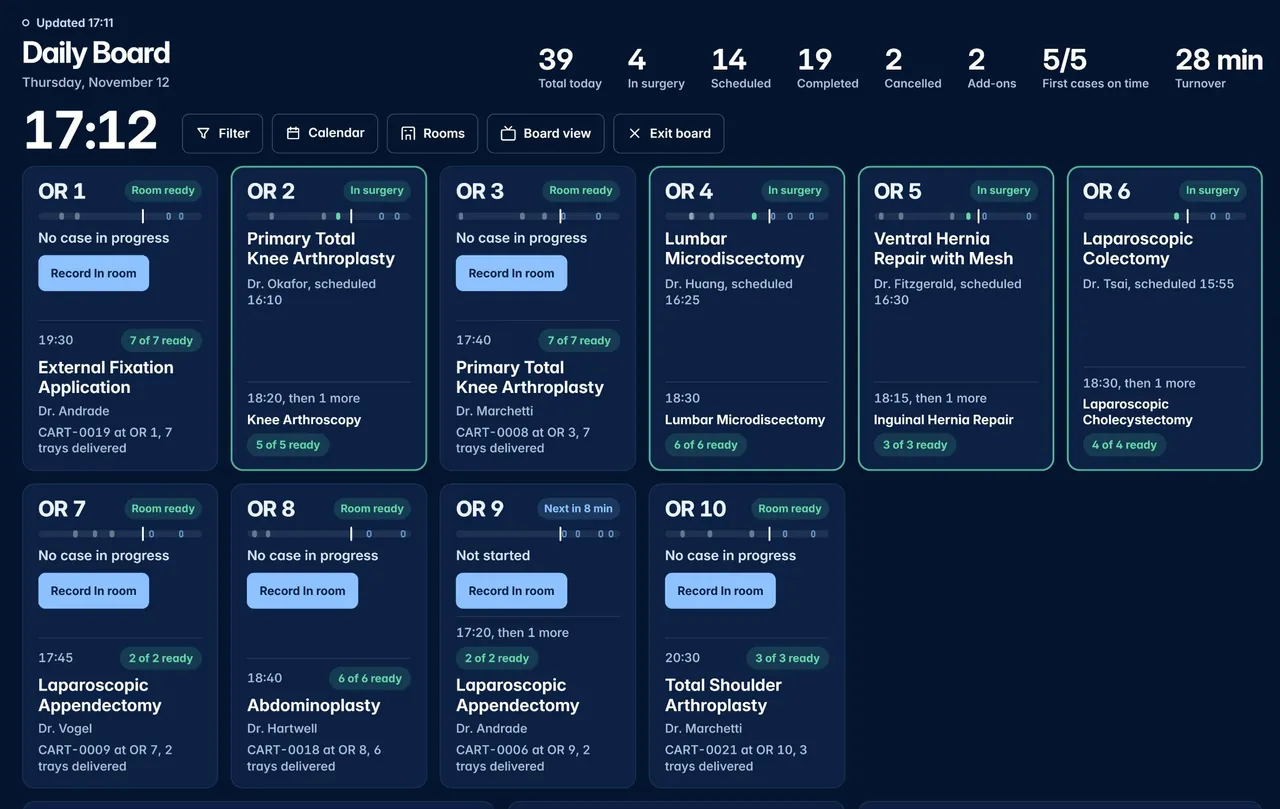
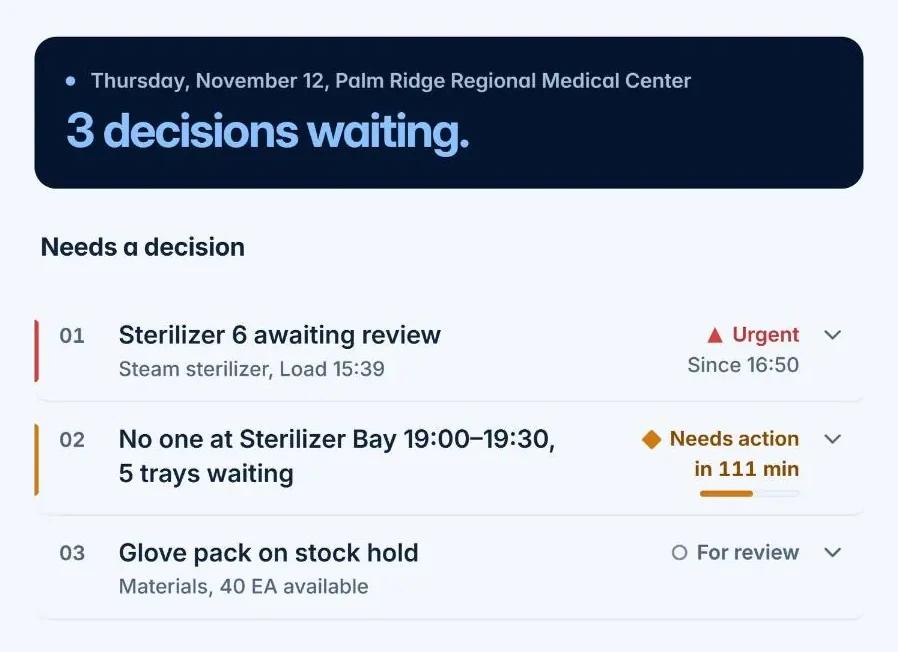
Readiness breaks quietly, hours before the first incision.
Every case depends on hundreds of instruments moving through sterile processing, case carts and handoffs overnight. When one goes missing, the OR usually finds out at the worst possible moment.
Sterile processing
7.5%of active trays had missing instruments, across 336,784 trays at 251 U.S. facilities.
BMC Health Services Research, 2026Case cart and room setup
26.2%of 562 observed surgical cases had an instrument error.
BMC Surgery, 2024Team handoffs
~30%of observed OR team exchanges involved a communication failure.
Quality & Safety in Health Care, 2004First incision
48.8%of 385 elective spine cases at one academic center started more than 10 minutes late. First cases: 24.2%. Later cases: 85.7%.
Surgical Neurology International, 2025
$57.71average total cost of one OR minute across 278 California hospitals in FY2022. JAMA Surgery, 2026
Published research, not OctaVia results. Each study measured a different setting.
One AI platform for the whole readiness chain.
This is AI Perioperative Automation: four AI capabilities share one live record of every instrument, tray, loaner and case. AI does the looking, matching and forecasting. People make the decisions.
Know where every tray, case cart and loaner was last seen, its processing status and the case it belongs to, with exceptions surfaced before they become delays.
See what moved.
Know what needs attention.
Status and handoffs
The value of AI Perioperative Automation
Every lost OR minute has a price.
Published studies put numbers on missing instruments and late starts. OctaVia SRS is being built to win those minutes back before the first incision.
- $57.71average cost of one OR minute across 278 California hospitals in FY2022. JAMA Surgery, 2026
- $6.8M–$9.4Ma year in OR charges lost to instrument-related delays, estimated for one two-hospital campus. BMC Surgery, 2024
- $317Ma year to replace missing instruments in U.S. hospitals, modeled from 251 facilities at median prices. BMC Health Services Research, 2026
- $771Ka year in OR labor costs saved at one hospital that recovered 1,343 OR hours with on-time first cases. Journal of Healthcare Management, 2019
Published research and other hospitals’ results, not OctaVia outcomes.
ONE STEP FOR HOSPITALS, ONE GIANT LEAP FOR SURGICAL CARE
Most hospitals still run readiness on scans, spreadsheets and calling around. OctaVia SRS brings AI Perioperative Automation to that work: it is designed to see, match and forecast, so problems surface while there is still time to fix them.
Compared with common manual workflows, not with any specific product.
Why it is hard to copy
- Patent pending
- Core readiness methods are patent pending.
- Human in the loop by design
- AI observes and flags. People decide. Built for clinical trust from day one.
- One readiness record
- Find, inspection, tracking and forecasting share one record across SPD, the OR and leadership.
- Built from inside the OR
- Led by an orthopedic spine surgeon and a former medical device representative turned applied AI engineer.
Built for everyone behind the case.
Protect OR time. See first-case risk early.
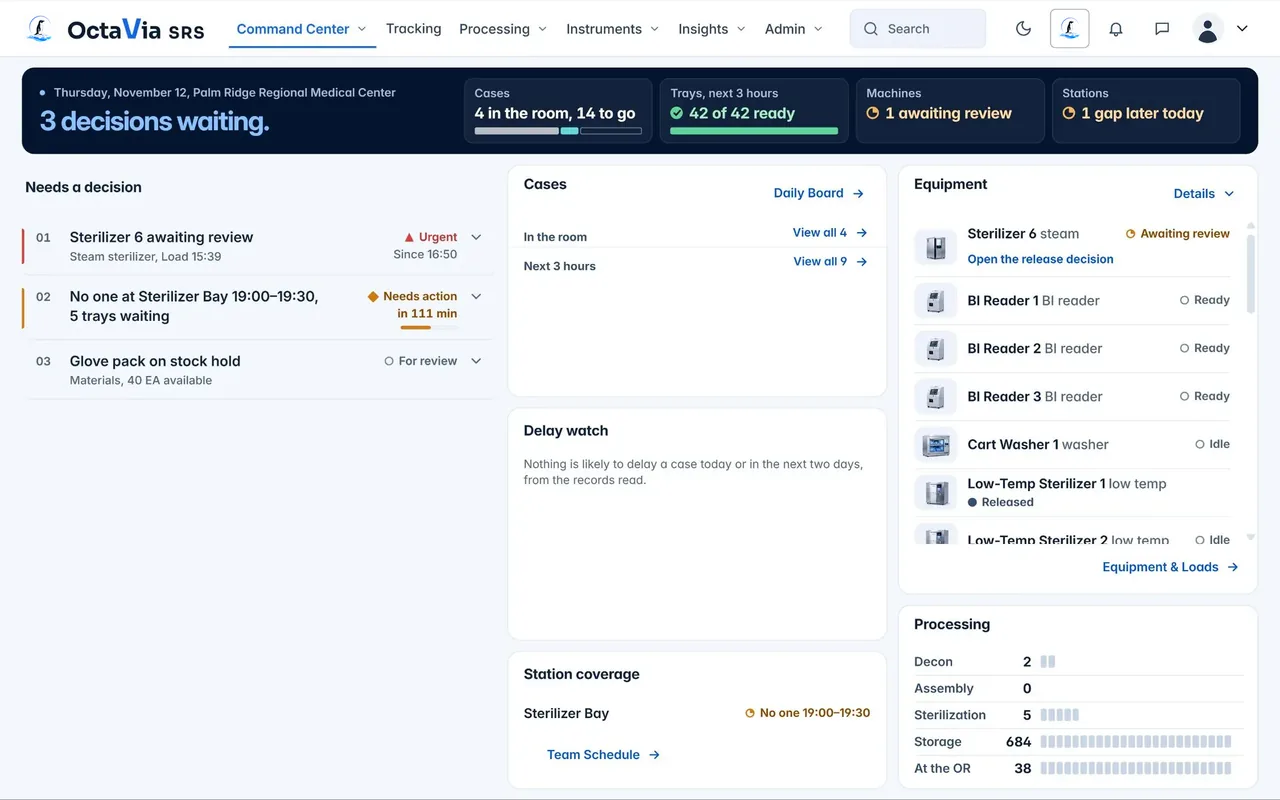
Late starts, missing instruments and loaner surprises cost OR minutes and staff overtime. OctaVia SRS gives leaders one AI-assisted view of readiness across every room, while there is still time to act.
- First-case readiness across every room
- AI flags for trays, loaners and late-start risk
- Scenario estimates of OR time and cost impact
AI assists. People decide. Every match, flag and forecast goes to a person.
Our vision
An open platform for
perioperative robotics
that eases the strain on overstretched hospital systems, improves operational efficiency, and strengthens financial sustainability.
At its heart, the goal is simple: to give hospitals the freedom to direct their most valuable resources—people, time, and expertise—where they matter most: caring for patients.
- 01
Decontamination
Sorting, cleaning and washer loading.
- 02
Prep & Pack
Inspection and tray assembly.
- 03
Sterilization
Loading and unloading of sterilizers.
- 04
Case cart delivery
Carts built, delivered to the OR and returned.
Robots do the work. Your team makes every call.
Working in perioperative robotics?
Before the first incision.
See AI Perioperative Automation at work: OctaVia SRS finds instruments, flags concerns, tracks trays and forecasts delays, with your team making every call.
Patent pending. Statistics are from published research, not OctaVia SRS results.
Built from inside the operating room.
OctaVia SRS is led by its co-founders: an orthopedic spine surgeon with 40 years in healthcare, and a former medical device representative who supported thousands of surgical cases before becoming an applied AI engineer. They have lived the readiness problem from both sides of the sterile field.
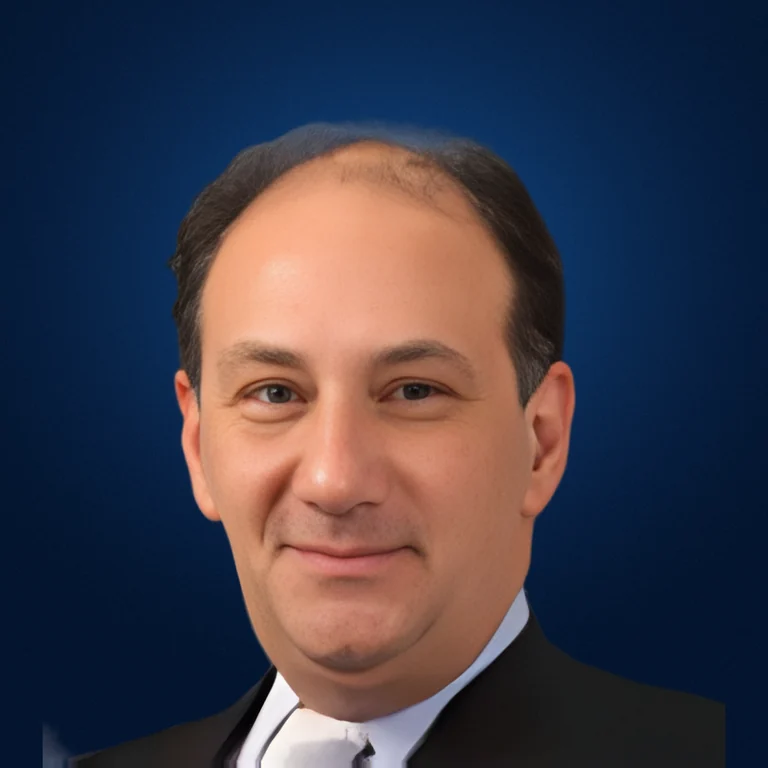
Richard E. Peress, MD
Co-Founder
Chief Executive Officer
Orthopedic spine surgeon with 40 years in healthcare. An NYU graduate with a double major in biochemistry and physics, he earned his MD at Columbia, driven to understand things at a fundamental level and solve complex problems. He took that into spine surgery, then hospital administration and the board of Phelps Memorial Hospital in New York. In and out of the OR, he saw a system propped up by excellent people managing chaos. OctaVia SRS is built for the people who kept it going.
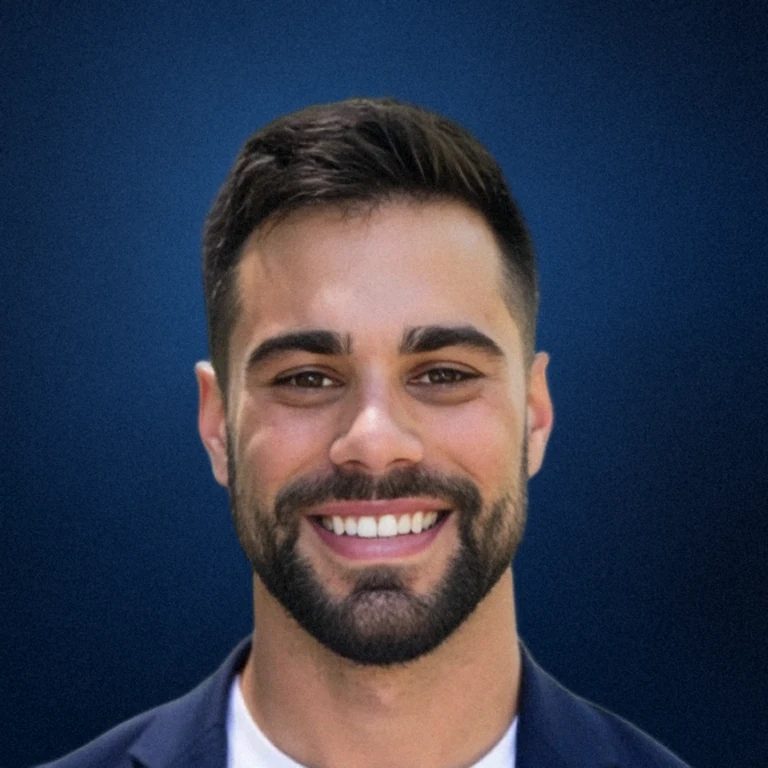
Matt Rodriguez
Co-Founder
Chief Technology Officer
Former medical device representative turned applied AI engineer. He spent nearly a decade in the operating room, supporting thousands of surgical cases, including robotic-assisted joint replacement. Up close, he saw a broken system that skilled OR and sterile processing teams hold together with phone calls, paper and memory. He turned a side passion for computer science and AI into a career, and now builds the system those teams never had.
Build the future of AI Perioperative Automation.
We’re preparing to welcome interns and early teammates as OctaVia SRS grows. Help build AI that gives surgical teams their time back.

Roles, timing and application details are still taking shape.
Start a conversation.
Send an introduction to the OctaVia team.
Hospital or investor?
To mrodriguez@octaviusglobal.com
Cc rperessmd@octaviusglobal.com
Nothing has been sent yet. Press Send, or open a draft in your own email app.
Partner with OctaVia SRS.
We’re looking for a small number of hospitals, health systems and investors to help shape OctaVia SRS before launch: AI Perioperative Automation that does the observing and recording, so SPD and OR teams can focus on the decisions only they can make.
- Introduce your teamTell us about your facility or fund, your role and what you want to improve.
- Walk the workflowTalk through how trays, case carts, loaners and handoffs move today.
- Shape what comes nextGive early feedback and help decide where OctaVia SRS should fit first.
Patent pending. An inquiry never needs patient information.
Start a conversation.
We’ll prepare an inquiry for you to review and send.
To mrodriguez@octaviusglobal.com
Cc rperessmd@octaviusglobal.com
Nothing has been sent yet. Press Send, or open a draft in your own email app.